Skids vs. Pallets: What’s the Difference (and Which Do You Need)?
If you work in shipping, manufacturing, or procurement, you’ve probably heard “skid” and “pallet” used interchangeably — sometimes even by the same person in the same sentence. In everyday conversation, that’s usually fine. But when you’re specifying packaging for a heavy, oversized or irregularly shaped load, the difference matters.
This article breaks down what a skid actually is, how it differs from a standard pallet, and when a custom wood skid is the better choice for your shipment.
What Is a Skid?
At its core, a skid is a structural base used to support, lift, and move a load — typically built with runners (the long support beams underneath) rather than a full standard deck. Skids are often built to accommodate specific load shapes, weights, or handling needs rather than conforming to a fixed, standardized size.
Because skids can be engineered around the load itself, they tend to show up in situations where a standard, off-the-shelf pallet doesn’t quite fit the job — think heavy machinery, oversized components, or irregular shapes that need extra support in specific places.
Custom skids can be configured in several ways depending on the load, including:
- Runner sizes, often paired with rubbing strips for added durability
- Deck options, including 1” or 2” plywood, or floating deck designs
- Bolted headers and reinforced construction for heavier loads
- Equipment mounting collars, steel fixtures and wood mounting fixtures for securing specific components
- Air-dampened skid cushions for shock-sensitive loads
- Tar paper lining for moisture control
- Stenciling, part numbers and labeling for inspection and traceability
Basin Industries works with wood skids as part of its custom packaging capabilities, alongside wood crates, corrugated packaging, and dunnage — designing solutions around the load rather than fitting the load to a pre-set format.
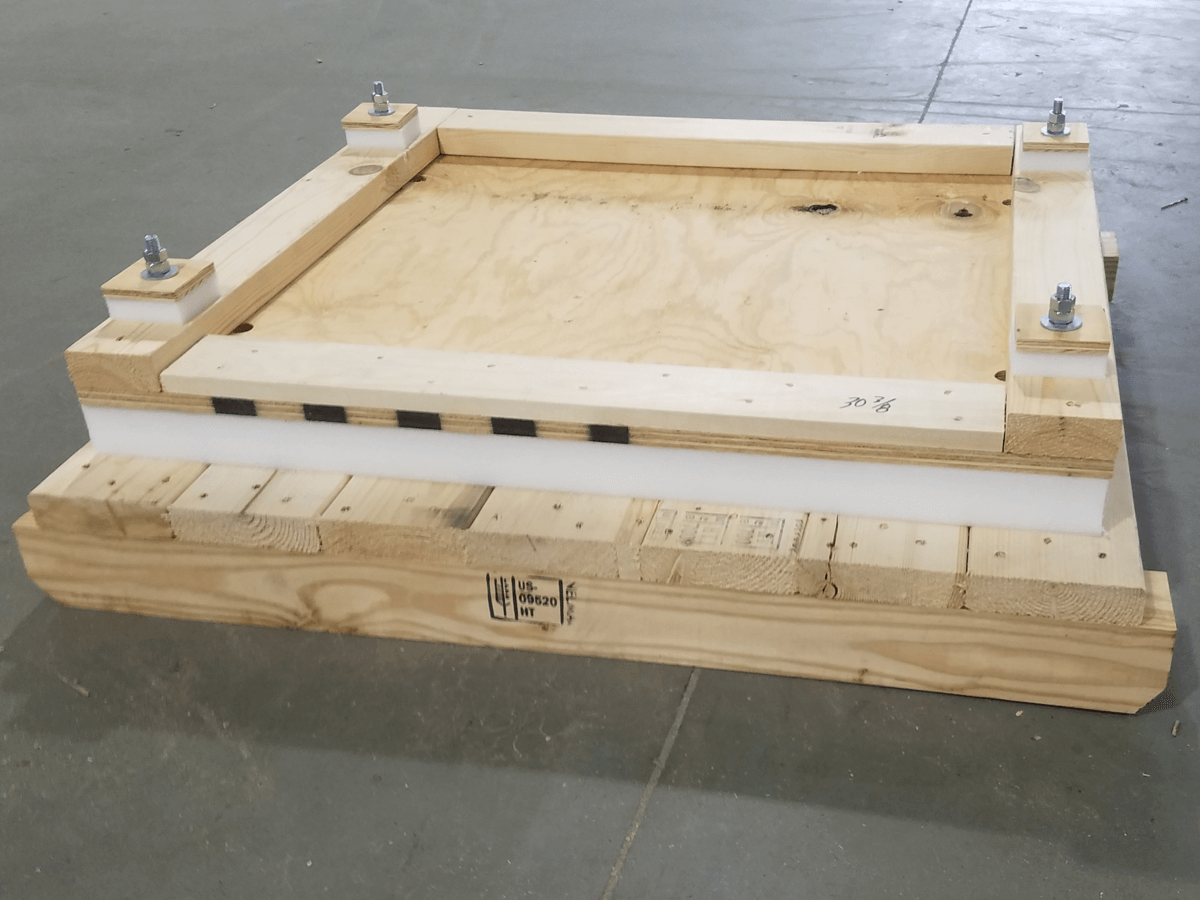
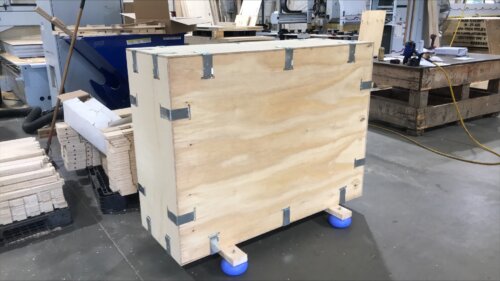
Above: An example of a custom wood skid. Note its custom design, floating deck and high-quality materials.
What Is a Pallet?
A pallet is a standardized flat structure — usually with a full deck on top (and sometimes the bottom) — designed to support goods for transport and storage, often in combination with a forklift or pallet jack. Pallets are widely used because they’re consistent in size and built for repeatable, high-volume handling.
We’re covering pallets here for context, since it’s a term most readers already search for and compare against skids. Basin Industries does not manufacture or supply standard pallets — our focus is on custom wood skids and packaging solutions built around specific load and handling requirements.
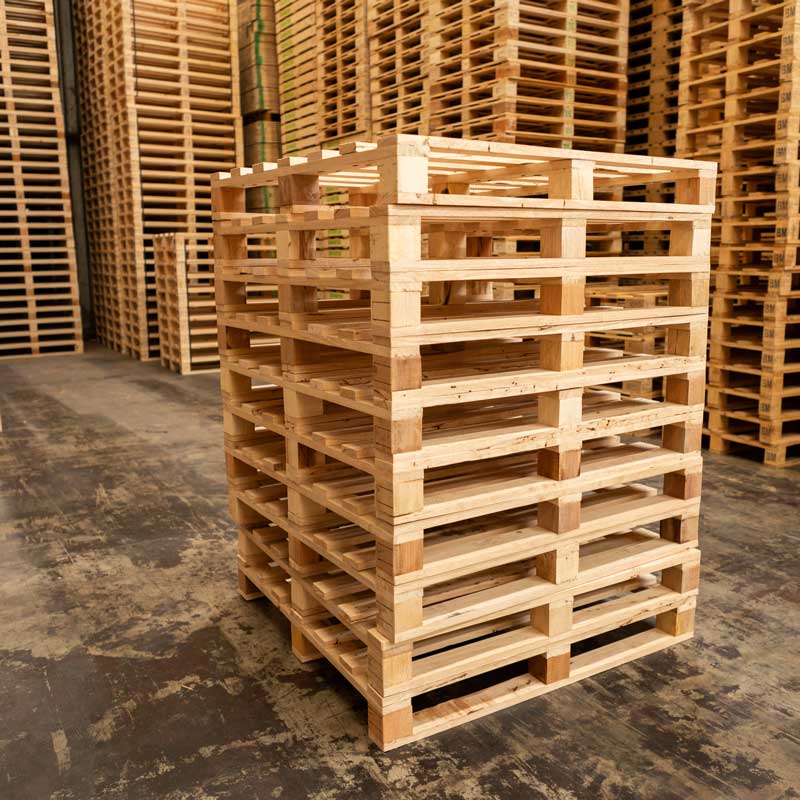
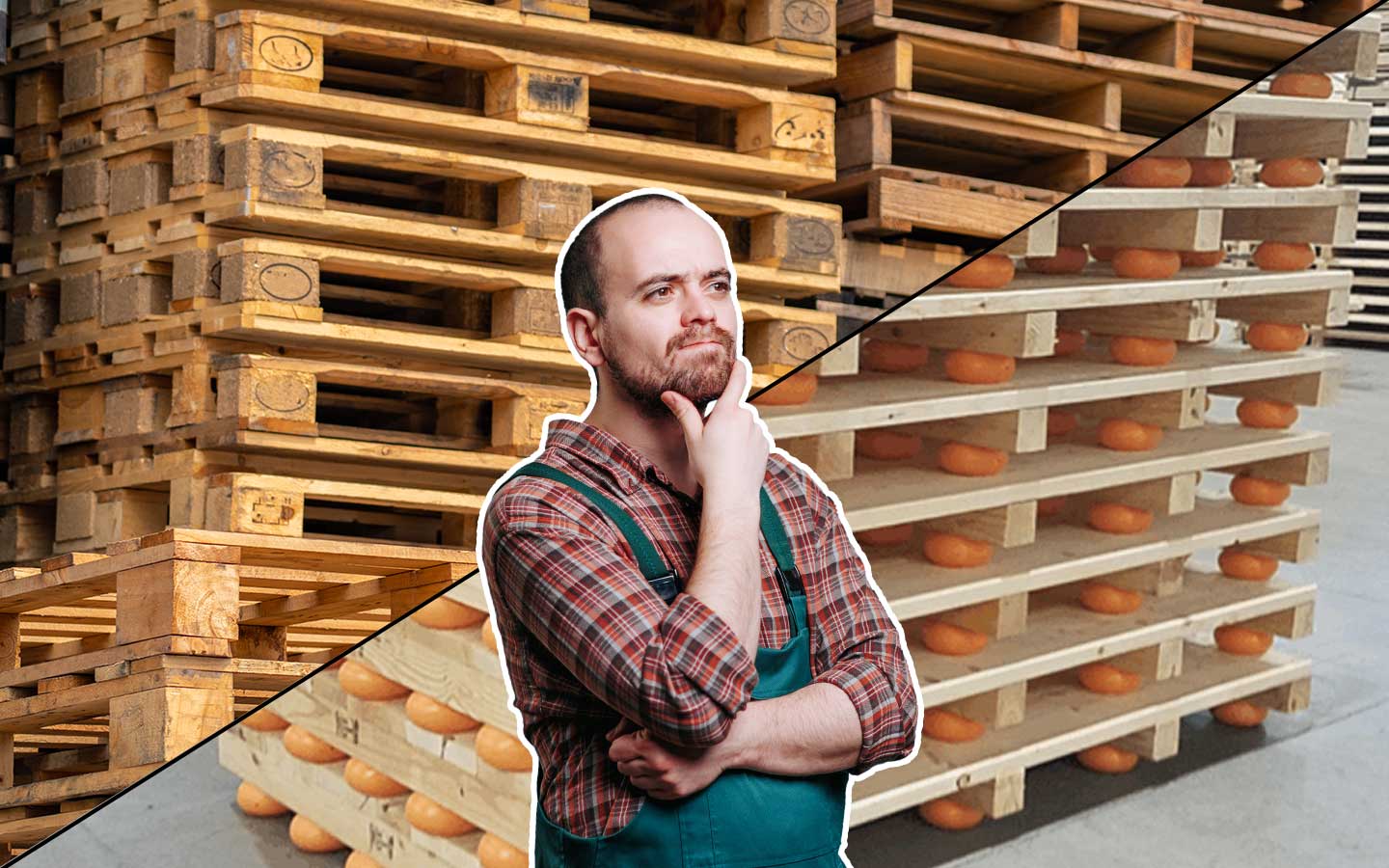
Above: A stack of traditional wood pallets.
Basin Industries does not produce standard wood pallets, which are typically produced at high volume and do not use standard dimensional lumber.
Skids vs. Pallets: The Main Differences
When a Custom Wood Skid Makes More Sense Than a Standard Pallet
A standard pallet is built for consistency — same size, same deck, same weight range, shipment after shipment. That’s exactly what makes it a poor fit for loads that don’t follow that pattern.
A custom wood skid, by contrast, can be designed around your specific load: its weight distribution, its shape, its fragile points, and how it needs to be lifted or secured. This is especially relevant for:
- Heavy loads that exceed typical pallet weight ranges
- Oversized components that don’t fit standard pallet footprints
- Irregularly shaped equipment or parts that need targeted support
- Industrial shipments where load stability and handling precision matter more than standardization
Basin Industries builds custom wood skids as part of its broader custom packaging work, which also includes wood crates and corrugated packaging — all designed around engineering input rather than a one-size-fits-all template.
Common Applications for Industrial Skids
Industrial skids are generally used wherever a load needs individualized support rather than a standardized base. Basin Industries designs and builds skids and other custom packaging for industries including aerospace, automotive, agriculture, heavy equipment, electronics, display technologies, specialty materials and retail.
Heavy equipment shipments are a good example of where skids do a lot of work. Drivetrain systems, hydraulic assemblies, fabricated steel structures and sensitive machined components generally need more support than basic shipping materials can provide. This is where a purpose-built skid, engineered for the specific load, comes in.
For shipments with strict compliance needs, Basin Industries also designs and manufactures packaging to military and ASTM specifications, integrating the applicable standard into the skid or crate design.
If your shipment is headed internationally, wood packaging requirements (such as ISPM 15) may apply — this is worth discussing with your packaging provider early in the design process. Learn more about ISPM 15.
How Basin Industries Supports Custom Skid and Packaging Needs
Basin Industries designs and builds custom wood skids as part of a broader packaging capability that includes wood crates, corrugated packaging, custom packaging, and dunnage — supported by engineering design work to match the packaging to the load, not the other way around.
If your shipment doesn’t fit neatly into a standard pallet — because of weight, size, shape, or handling requirements — a custom skid may be a better starting point for the conversation.
Explore Basin Industries’ custom wood skids, or see how our engineering, fabrication, and project support comes together for industrial packaging needs. You can also review a related project in our case study on freight and storage savings with EZ Loc crates.
What to Confirm Before Choosing a Skid Design
Before finalizing a skid design, it’s worth thinking through a few key questions:
- Load weight and distribution — How heavy is the load, and how is that weight spread across its footprint?
- Dimensions — What are the exact size requirements, including any clearance needs?
- Materials — Does the load or shipping environment require specific wood types or treatments?
- Destination — Is the shipment domestic or international, and does it need to meet export wood packaging requirements?
- Handling method — Will the skid be moved by forklift, crane, pallet jack, or another method?
Working through these details with your packaging provider up front can help avoid handling issues, damage, or delays later in the shipping process.
Have questions about whether a custom skid is right for your shipment? Start a packaging quote or check our FAQ page for more information.
continue reading